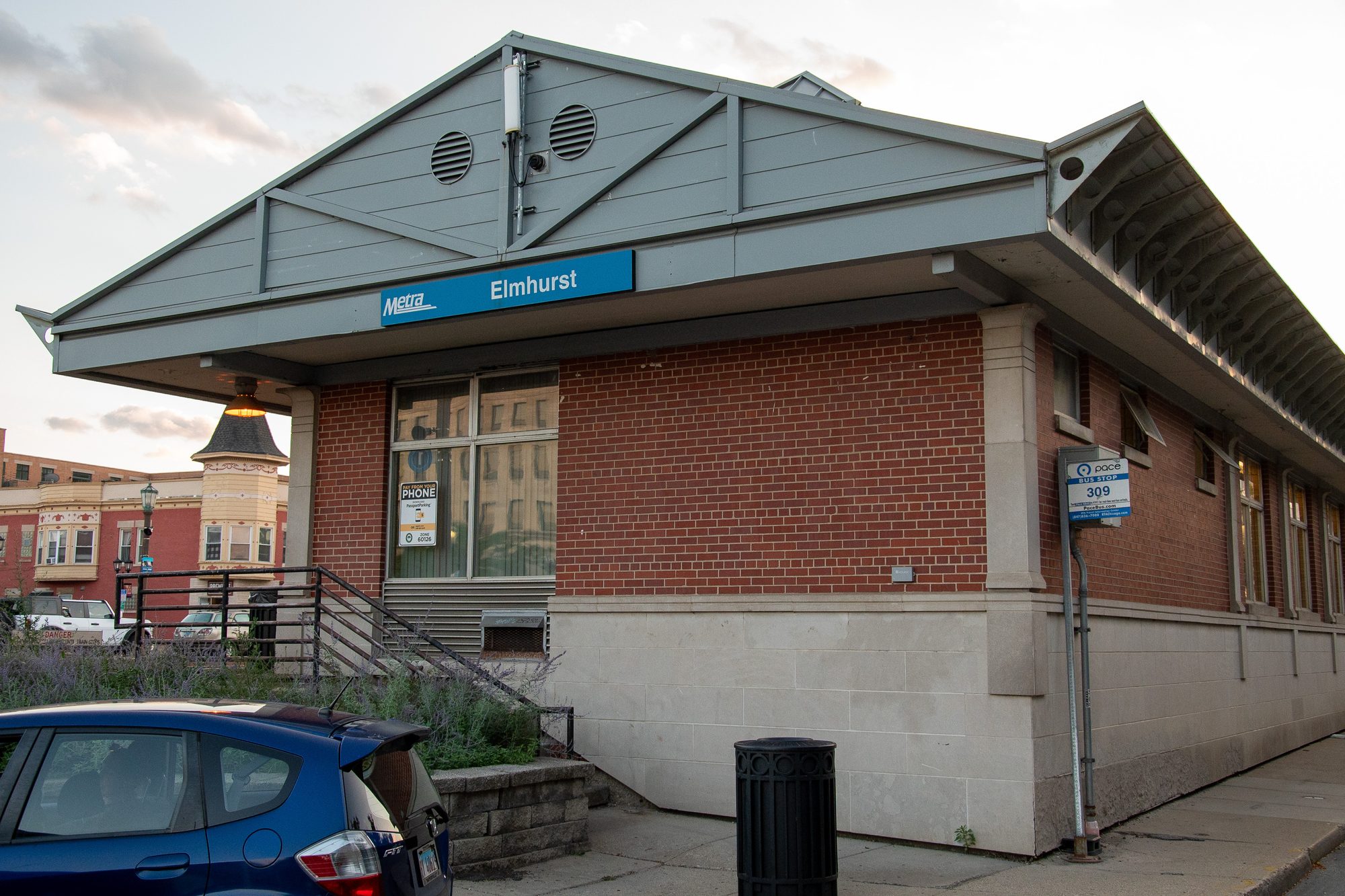
Elmhurst and Villa Park commuters could eventually see Metra trains running every 30 to 60 minutes throughout the day under a draft plan the agency released in late October.
The draft Systemwide Network Plan, or SNP, lays out what Metra says it would take to shift from a rush-hour-focused railroad to an all-day, all-week regional rail system. The agency is accepting public comment on the plan through Dec. 14, and will hold a virtual public meeting at 7 p.m. Monday, Nov. 16, according to Metra's SNP page. The Zoom link for that meeting will be posted by Friday, Nov. 13.
Both Elmhurst and Villa Park have stations on the Union Pacific West line, one of the corridors covered by the plan. Under the first phase, called Regional Rail 1.0, the UP-W would see what Trains magazine described as "a simplified pattern of local and express stops" aligned with where ridership potential exists. Systemwide, the first phase calls for trains every 30 to 60 minutes on all lines.
A more ambitious second phase, Regional Rail 2.0, would push frequencies to every 15 to 30 minutes but would require major infrastructure projects, including improvements at the A2 interlocking near Metra's Western Avenue station. That interlocking could include a flyover allowing trains from Ogilvie Transportation Center to reach the UP-W line without crossing paths with Amtrak and other Metra routes, according to Trains.
The price tag is steep.
Metra estimates Regional Rail 1.0 would cost $2.7 billion in capital spending and $269 million in additional operating costs, according to the agency's Oct. 29 announcement. Reaching the 2.0 level would add another $6.4 billion in capital costs and $411 million more in operating expenses. The total exceeds $9 billion.
The draft report breaks down the near-term capital spending: $380 million for additional equipment, $360 million for signals and sidings, $140 million for facilities allowing trains to turn mid-route and $1.8 billion for large-scale projects such as the Rock Island Intercity improvements.
Metra Executive Director and CEO Jim Derwinski said the plan "lays out near- and mid-term implementation steps to support the evolution of our service, but it also defines a long-term vision for what regional rail can become." He added that Metra hopes it will "serve as a blueprint to support the transition and success of NITA in a regionally coordinated effort to implement regional rail."
The Northern Illinois Transit Authority (NITA), created by state legislation, requires Metra to implement a regional rail pilot on the Rock Island Line by January 2027. The NITA Act also makes the transition to regional rail part of the service standards Metra must meet going forward.
NITA interim Executive Director Jamie Rhee said riders "want to move more easily from city to city across the suburbs and collar counties in addition to more frequent service downtown." She said NITA looks forward to incorporating all service board efforts into a regional planning framework beginning in 2027.
Metra said it has already taken early steps toward regional rail, including simplified schedules, shorter off-peak headways and better reverse-commute service. The agency said lines that adopted more regional rail elements saw stronger ridership recovery.
Residents can review the draft report and submit feedback through an online form at Metra's SNP page.