When students at York High School and Sandburg Middle School walk through the doors on Thursday, August 13, they'll be covered by a new state law that for the first time classifies AI-generated sexually explicit images of classmates as cyberbullying.
Illinois House Bill 3851 took effect Wednesday, July 1, expanding the state's definition of cyberbullying to explicitly include AI-generated digital replicas, including fake nude or sexual images created without a student's consent. The law applies to all Illinois public school districts, including D205. It does not set a specific compliance deadline, but because it is already in effect, districts are subject to its requirements when students return.
That gives D205 roughly six weeks to update its policies before the first day of school.
What the law does
HB 3851 makes clear that students who create, share, or forward AI-generated explicit images of classmates can face school discipline. It gives districts clearer authority to intervene when AI-generated content disrupts a student's well-being or education.
The law does not change Illinois criminal statutes. AI-generated sexual images appearing to depict minors can be prosecuted under existing child pornography and obscenity statutes, which carry felony charges.
In early 2026, Lake Zurich Community Unit School District 95 confronted exactly this scenario: students used AI to create sexually explicit images of classmates. The district reported the matter to police and launched education efforts on online safety.
What officials are saying
No D205 official has commented publicly on the district's plans to comply with HB 3851. Scott Rowe, superintendent of Township High School District 214, one of the state's largest districts, described the law's impact on schools statewide.
"The message is clear. AI does not remove responsibility," Rowe said. He noted that students who share or forward AI-generated content face consequences, not just those who create it.
Debra Jacobson, general counsel of the Illinois Association of School Boards, acknowledged the challenge districts face, calling AI policy "a bit of a game of Whac-A-Mole, just because the technology is evolving very quickly."
The scope of the problem
A 2024 survey by the Center for Democracy & Technology, the most recent national data available, found that 40% of K-12 students knew of a deepfake involving someone at their school. Fifteen percent knew of a sexually explicit deepfake depicting a member of their school community. Among those students, 51% said female students were targeted more often than males.
The same survey found more than 60% of teachers reported their school had not shared policies or procedures related to AI-generated sexual imagery.
What's still missing
The Illinois State Board of Education was required by July 1 to develop statewide guidance on AI in schools. As of Saturday, July 5, that guidance has not been published. ISBE press secretary Lindsay Record confirmed the agency is still developing it, adding that local policies and responses to specific incidents remain the responsibility of individual districts.
What's next for D205
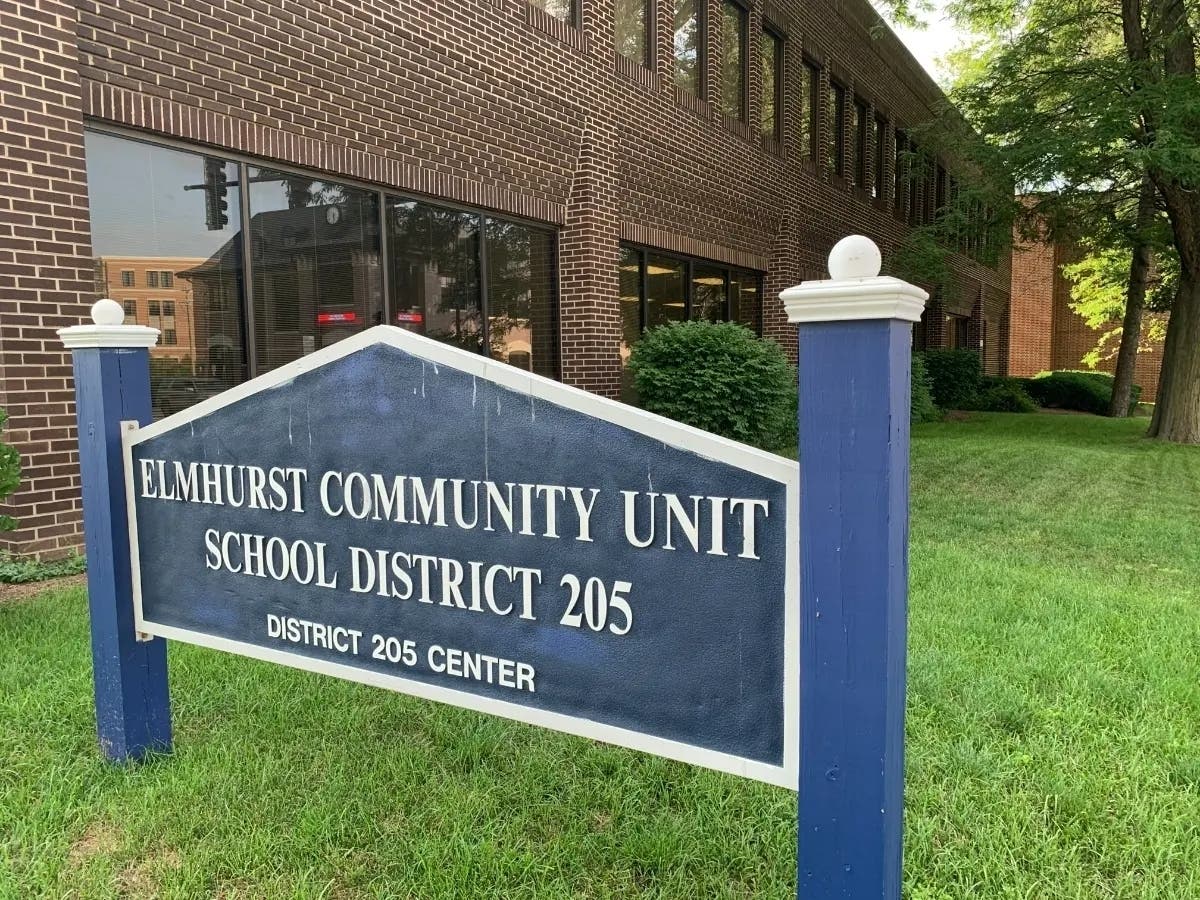
D205 has not publicly commented on its plans to comply with HB 3851. No board agenda item addressing the law has been posted. Parents can contact their school's principal or the district office to ask what policy updates are underway before August 13. The district's board calendar will show when the next meeting is scheduled.